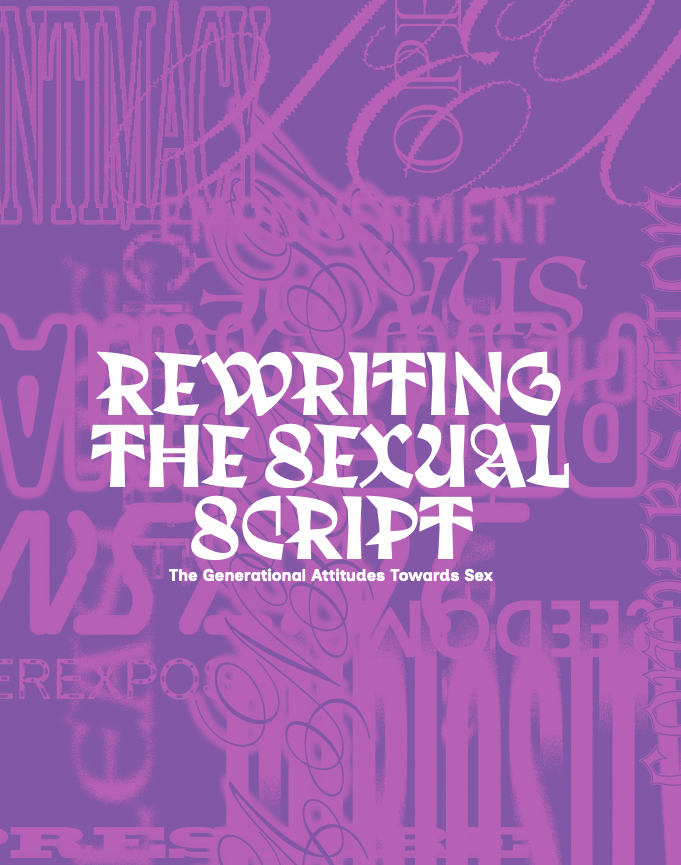
The Generational Attitudes Towards Sex
Words by: Anna Marina Andrasi
Art by: Anonymous
Today, sex is labelled as a lot of things: political, performative, messy and confusing.
Our generation (Gen Z) sees sex and sexual topics mentioned in our everyday lives, on social media, in memes, and throughout group chats with friends. This public visibility of sex would have been unimaginable for previous generations. The way we talk, think, and experience sex has shifted drastically over time, or at least that’s what it looks like.
For the majority of the 20th century, sex was rarely discussed, especially not in public. The idea of ‘talking dirty’ in a literal sense was not only frowned upon but unthinkable. In Australia, like many Western countries, the stereotypical sex education in schools (if there was any) focused on fear rather than information on sex: STDs, pregnancy, or the ‘moral’ aspects of it. Pleasure? Irrelevant. Consent? Unmentioned. The spotlight remained on vague facts and a sense of shame, which could have carried over into adulthood. Fast-forwarding to 2025, it’s like the script was rewritten. Sex-positive influencers and sexual therapists are gaining the spotlight. Heck, we even have a Safe n’ Sexy Week here run by MONSU, where you can learn without feeling shame and embarrassment. Consent is openly discussed (as it should be), to the extent that it’s mentioned on posters on the train, in university prep units, and between people. The conversation around consent is one of the most significant aspects of sex, which sets today’s generation’s attitude apart from older generations. Marital rape wasn’t fully criminalised in the entirety of Australia until 1994, and today we have real and public conversations around the nuance of consent. That’s change.
While this openness about sex feels like a liberation, it comes with its own pressures. You’re expected to explore the possibilities, all while having it all figured out. Openness doesn’t always mean understanding. While being ‘sex-positive’ is allowing many people to feel comfortable with their experiences and sexuality, there are some people who now struggle to admit what they haven’t done. When a community is so open, it’s easy to forget that not everyone feels safe, ready, or even interested in sharing these details. Some might feel pressured to be more experienced than they really are, which unfortunately, leads us back into another shame-focused circle.
The internet and social media have made sex easier to find. Sites like Pornhub and OnlyFans, which allow people to monetise off of it, have skyrocketed. However, these sites have also blurred the lines between real intimacy and commerce. With some people arguing that porn and hookup culture have ruined romance and the understanding of ‘real sex’. This brings up new feelings and questions for today’s generation: Is sending a nude empowering or exhausting? Is casual sex truly casual if it leaves you feeling empty afterwards? These aren’t questions previous generations had to grapple with in the same way. The emotional consequences of digital sex aren’t always talked about, yet they shape how people think about relationships, their partners, and how they feel about themselves.
So, where does this leave us? Older generations were bound by silence, while ours risks drowning in noise. So maybe the real change isn’t swinging from each extreme, but holding space for nuance and conversation. Recognising that openness doesn’t mean overexposure and that liberation isn’t about how much sex you’re having, but how freely you can choose what you do and don’t want.

