Words by: Akira Kerr
Art by: Dora Chung
She is rewarded with a light peck on the cheek for straightening her husband’s tie as he steps out for another day at the office. She softly closes the door behind her, happily pondering upon what wondrous tasks lay ahead of her today. She gazes wistfully at her children playing on the hearth, her daughter combing her doll Betty’s pristine polyester locks, and her son puttering around with a Matchbox miniature car in hand. She looks in the mirror hung next to the front door and smooths the non-existent creases out of her floral square-necked, A-line dress.
Then, she pulls out of her apron pocket an iPhone 15.
Haha, got you! No, I am not describing a 1950s housewife who dutifully awaits her husband’s return, as she enjoys the home she had no power to buy, and no power to sell. This is a modern member of the tradwife movement.
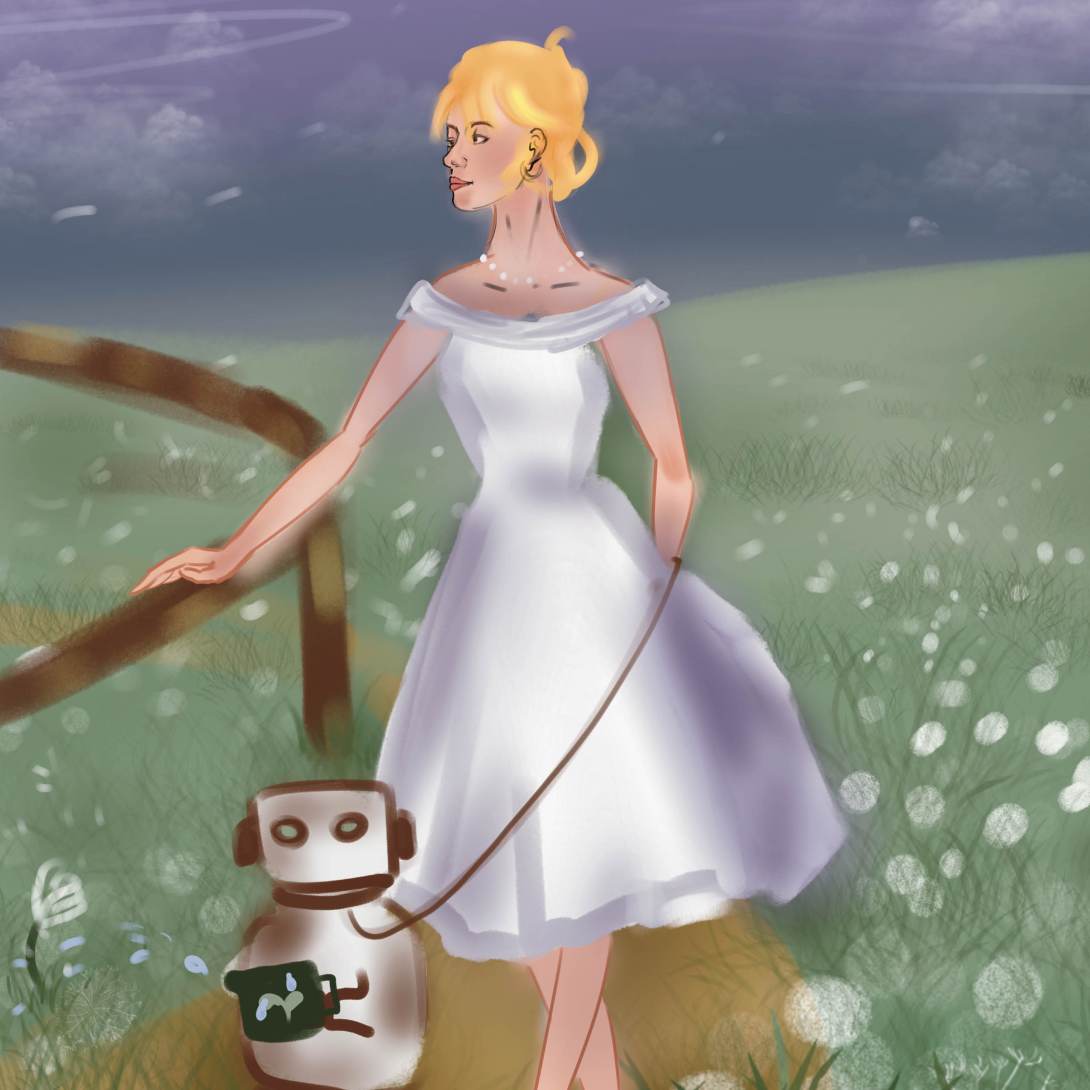
For those whose social media algorithm gods have spared them of content from this mind-numbing phenomenon, a tradwife, short for ‘traditional wife’ can be characterised by a reversion to practices typical of 1950s housewives. Think, a typical white woman with modest but flattering knee-length dresses, pristine blowout curled hair and freshly done makeup, latex cleaning gloves glued to her pretty little hands, and dinner on the table by five pm sharp. She bakes her own bread, grows her own vegetables, and firmly believes in a clear division of labour in the family unit.
Like so many movements that have emerged on social media, there is a broad spectrum that exists in the tradwife subculture.
On one side, naturally, there is a group of women who truly and ideologically believe that a woman’s place is in the home. Feminism is a hoax created by women who are butt-hurt that men don’t like their hairy armpits and that they can’t hold onto a man for more than a week.
These tradwives are often referred to as a soft, palatable face for two essential pillars: patriarchy and white supremacy. These are the women who between wiping the kitchen counter and ignoring their lack of financial autonomy, echo a familiar orange-faced man’s proclamations that America needs to be made great again. They dream of gaining back a past that institutionally enforced a lack of freedom for women, where the husband was the only recognised head of the household. Where a woman’s god-given position in society lies beneath men (or under a man), as their body’s sole purpose is to give birth to and raise their husband’s children.
A claim that is made in this subsect of the tradwife culture is that feminism is failing women. This is honestly devastating. I feel sad for these women that feel feminism, the movement designed to acquire freedom and equity for them, is not serving them. Whether they have attempted to enter the workforce, or finished high school and jumped straight into a marriage, these Tradwives have been failed not by feminism, but by the innocuous weed of patriarchy and male domination. It is a deep-seated disappointment and deprivation of opportunity they have suffered that brings them to this conclusion. The only way they can be successful now is by putting their autonomy in the hands of men who don’t look at them as people. The turning of women against feminism is the most threatening weapon patriarchy wields.
But within this movement, I dare to say there might be hope. On the other end of the tradwife spectrum, are the performative descendents of cottage core prairie girls. These are the Nara Smiths, the Emily Marikos, and the Estee C Williams’.
Now, I must acknowledge that both ends have one thing in common: a romanticism and glorification of a past never lived. These women will never know what 1950s housewives endured, yet they continue to cherry-pick the past to create a life that serves them.
But, the thing that separates the right-wing tradwives and the performative tradwives is a clear message by the latter is that this is a life choice for themselves, and that tradwife content creator’s work is monetised. These women have financial autonomy, as far as we can tell, where this is a lifestyle as much as it is their career.
So, if we examine the movement through this lens, can we say that the performative tradwife life is in fact… feminism? These women live their lives as homemakers and child-bearers — work that is thankless and is largely considered the default for women by the patriarchy. So, should we not praise them for reclaiming power and using these expectations placed on them as a means to gain independence? Romanticism of these tasks draws attention to them, and they make them appealing, they create a paradox where these unseen tasks are being seen in a sparkling, glittering haze of light.
Of course, the women who create this content are wealthy, and aren’t showing the less glamorous parts of motherhood and homemaking. I don’t think Mrs Smith has ever been seen cleaning a toilet in her life.
These tradwives are by no means the antidote to curing our world of patriarchy or our saviours when it comes to holding men who try to dominate women accountable. But their content creates a conversation about this invisible work that women do, that is in dire need of being seen and valued. The more we shine a light on the many roles that women play, the closer we come as a society to recognising feminism in its many forms.
 Esperanto Magazine