Words by: Akira Kerr
Art by: Liv Brown
Paxton Hall-Yoshida: The heart-throb I never thought I needed.
But there he was, the love interest in Netflix’s trashy-ish teen drama, ‘Never Have I Ever’.
Serving as the problematic protagonist Devi’s guilty pleasure fantasy, he was your typical academically challenged, pretending not to care about anything but the school sports team, impossibly attractive friend-to-lover that every good rom-com needs. For me, the only difference between him and every other boy next door depicted on television was that he is half-Japanese.
Do not get me wrong, ‘Never Have I Ever’ is not a show that should be esteemed for its character growth or riveting plot. Not to mention that Devi ends up with the wrong guy. But one thing it does well is representation. The diversity depicted in the cast must be applauded, and the writers (including Queen Mindy Kaling herself) have done it in a way that is meaningful to its viewers and doesn’t rely on clichés and stereotyping. This is why seeing Darren Barnet’s character Paxton Hall-Yoshida meant so much to me.
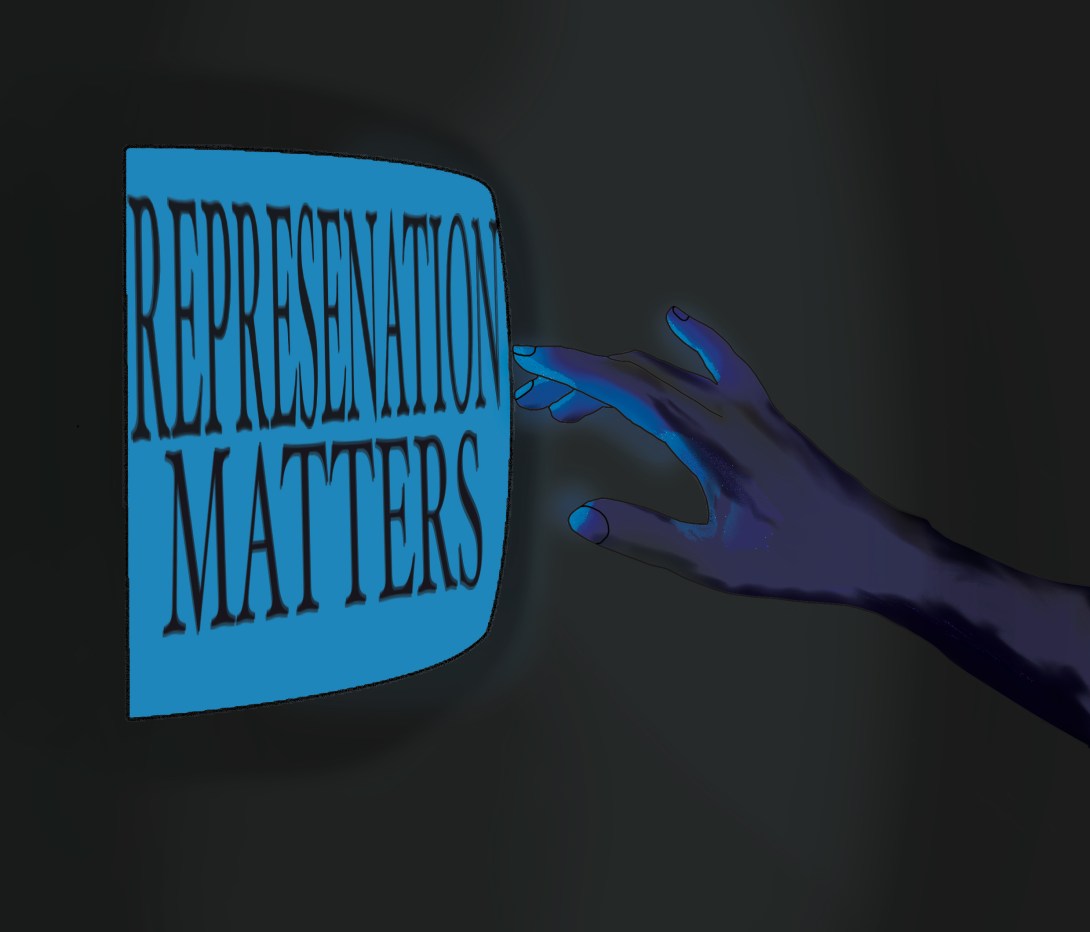
You see, half-Japanese representation in the media is so hard to come by in Western media. We rarely get to see ourselves on the silver screen, so sometimes it’s hard to believe that we are actually visible to others, or even to ourselves. The only representation I was ever afforded as a kid was Hiro and Tadashi Hamada from ‘Big Hero Six’, who we can only assume are half-Japanese by the appearance of their white aunt. Living between the realms of two races and cultures is a struggle that many of us face. So why wouldn’t we want to be able to see ourselves reflected in the media every once in a while?
It was last year, while everyone was working hard at uni and I was working hard getting through as many seasons of shows as possible before my study abroad, that I first encountered Paxton. I think one of the things that us Halfies can all relate to is that it takes a moment to click when we see another Halfie that is the same mix as us. Often, I will realise someone else is half-Japanese and just audibly say “OHH”. It was no exception for Paxton. It took me until someone in the show said Paxton’s full name, specifically his very Japanese surname ‘Yoshida’, to realise our connection. From that point on, I was rooting for him. Not only did I now have another character who I could feel a piece of myself in, but he was a LOVE INTEREST. He was a COOL GUY. I never get to be a cool guy!
Paxton’s identity as a half-Japanese person made me feel so validated — he would go home to his normal suburban house, he would sit down and eat with his white mum and Japanese dad, and he would go and visit his Ojiichan (grandpa) every now and then. When he calls his Ojiichan, he speaks in Japanese, and when they eat Japanese food they eat with chopsticks. Most importantly, he could walk around his school without being tokenised for being Asian.
To see a character just being as the same cultural identity as me, integrating into society with an unwavering sureness of who he was made me feel like I could just be too.
If I could just share with you one closing memory of my admiration of Paxton it would be this. For an extra credit report, Paxton presents to his class the story of his Ojiichan’s time in an internment camp during the war. Even though I can’t come close to understanding the trauma Japanese-American immigrants at this time suffered — and the continued repercussions it has — this scene felt like such a poignant representation of what it feels like to embrace your culture and show that you actually care. ‘Never Have I Ever’ offered me guidance in a place I never thought I would find it. So thank you Darren Barnet, and thank you Paxton, for being the representation I needed to edge closer to embracing the whole me.
 Esperanto Magazine