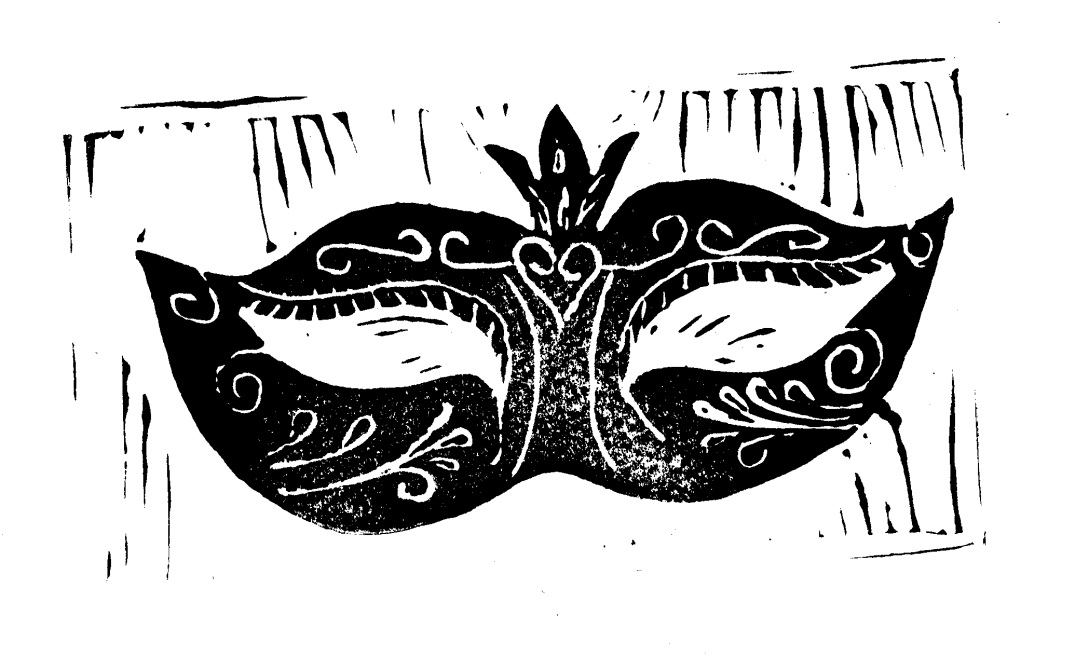
Cracking open the mask
Words by: Fae Gehren
Art by: Siena Thomas
“We do a great disservice to boys in how we raise them; we stifle the humanity of boys. We define masculinity in a very narrow way, masculinity becomes this hard, small cage and we put boys inside the cage. We teach boys to be afraid of fear. We teach boys to be afraid of weakness, of vulnerability. We teach them to mask their true selves…”
This quote is from Chimamanda Ngozi Adichie’s speech ‘We Should All Be Feminists’—a speech that blew apart everything I had believed about gender equality. I suddenly became aware of how gender expectations entrap us all—how men’s and women’s issues are not separate but intersectional. They need to be addressed together if we want to stride towards a better society, and out of the quagmire of patriarchal consumerism. The conversation around toxic masculinity requires vulnerability and courage, especially because it is easily shut down by those around us.
So I want to dive into this conversation: how does gender inequality affect men?
What does toxic masculinity even mean?
Masculinity in itself is not toxic, and it would be wrong to claim otherwise. However, the pressure cooker that is societal expectations for men is toxic. And these expectations have been forged over centuries through religion, politics and cultural demands.
The ‘masculine’ image looks a little like this:
Possession and ownership. Dominance and power. Wealth and financial success. Anger and Aggression. The breadwinner. The protector. The fighter. Objectification of women. Sexual prowess as a badge of honour. Shouldering problems alone. Ridiculing emotional vulnerability. Never asking for help.
But where, in this image, are the men whose eyes light up with glee? Whose laugh carries across the room and whose bright smile warms people’s hearts? Where are the men whose tenderness and care softens the brutality of even the hardest times? Where are the men whose open tears make everyone around him feel safer, more seen?
Where are the men who seek help and encourage others around them to do the same? And more importantly, where are the people who hold space for these men?
For it is not only men who enforce these stereotypes, but women too. Getting the ‘ick’ or finding kindness off-putting. Or rolling our eyes at the mention of men’s issues—something that is all too often used to minimise our own hardship. Maybe this is a trauma we carry from generations of living under the thumb of a patriarchal vortex, but in carrying our trauma instead of facing it we are locking the door and leaving men on the other side. And facing this trauma does not mean burying our pain to make space for someone else’s, it is about having constructive conversations with each other so that we may all see things a little clearer. Especially because much of this suffering is invisible to those who do not walk the same path as you. So if we fail to bring it to light, we are left dangling on either side of a ravine. This divide burrows into the heart of our relationships, our friendships, and our families—not to mention the systemic issues we all face.
So we need to bridge the gap together. Instead of building two different bridges, next to each other, with our backs turned.
For now, let’s shine some light on what toxic masculinity can look like. To do this, I asked some of my male friends for help.
Nachiketa (he/him)
“Fundamentally there is a construct of hierarchies that the masculine ecosystem works on. Every masculine identity is assumed to be aware of their place in the hierarchy.”
“I have seen how limiting, unreal and toxic this can be.” Toxic masculinity pits men against each other and creates an environment of competition, uncertainty and performativity. Nachiketa points out that men feel the need to be “constantly proving themselves, trying to ‘earn’ things from the world,” and it burns them out.
Leo (he/they)
One element of toxic masculinity that Leo sees very often is “that guys get with girls to impress other guys”. This is where we get that pressure for men to nose-dive into their sexuality without taking the time to consider what they really want, and we end up with women being “treated like an object”, as Leo puts it. We also see this in movies all the time with the classic womaniser being idolised by other male characters and brandishing their female conquests as a badge of honour. This culture of bragging about one’s sex lives can create a really uncomfortable space for men and a pressure that seeps into their identity. It also blocks real connections, with men and women, “because [men are] constantly pressured to put on a mask to impress both”.
Anonymous (he him)
“I feel like toxic masculinity is a by product of young men not having any role models. When I was growing up, I never saw my dad or my grandpa, or any of my extended male family members, cry or show any sort of emotions in a meaningful way. So I guess you kind of grew up as a kid and harboured that. Then you have to deal with that as an adult, which is hard.”
Thanks to these wonderful men who shared their experiences and thoughts, we can see this masculine mask that has been passed down through generations. A mask that is hardened by the images that dictate how men are supposed to be or the social construct of what it means to be a real man. On top of all these expectations around how men are supposed to act, there has also been an avalanche of new body standards for men over the last century. Hardened bodies, hardened minds, hardened hearts. And a rock-hard mask. And I haven’t even gotten to the issue of men’s mental health and the lack of support systems available to them.
But we are seeing some cracks in this mask. Men are starting to push back; they are exploring their gender through clothes, make-up, hobbies, jobs and more. I hope that one day, we can take off the mask altogether. For there is no one way to be a real man, society just hasn’t got the memo yet.
In the meantime, l would like to leave you with a song recommendation from my brother: ‘Alcatraz’ by Oliver Riot (trust me, it’ll make sense if you listen to the song).
 Esperanto Magazine