Words and Images by: Sarah Louise
You clutch your bag tighter, realising the sidewalks are beginning to crowd. Either side of the canal is neon-lit with signage worth a double take. The thick smell of marijuana constantly reminds you where you are.
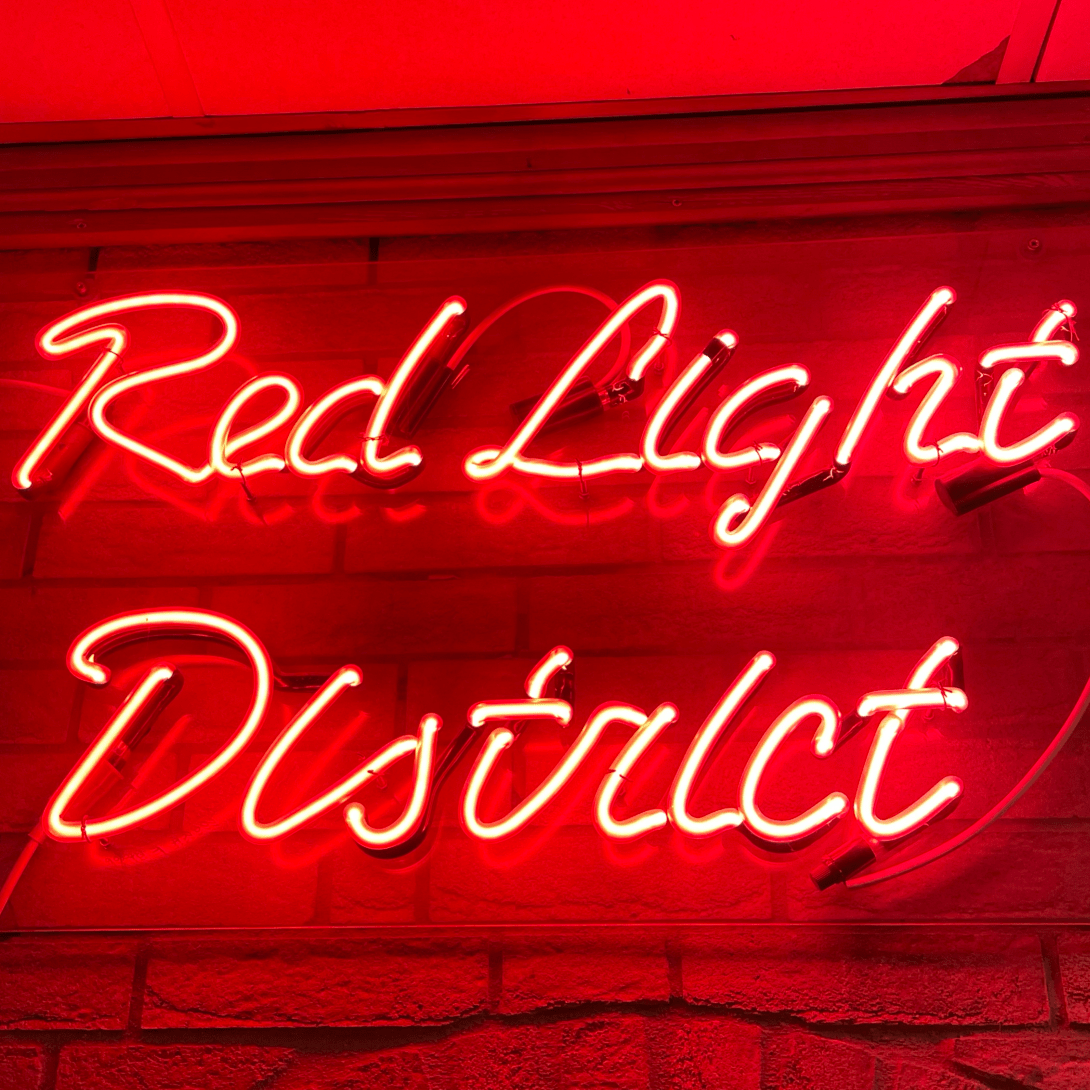
The terrace buildings are narrow and stories high with windows exhibiting women that glow under red light. You’re in the Red Light District.
Erotic theatres, coffee shops, peep shows, sex museums, karaoke bars, strip clubs, and even beautiful old churches — it truly has it all. The Red Light District sits in the heart of Amsterdam, making it easy to stumble across for those aimlessly wandering the city. Whilst there are several districts throughout the city, the most infamous sits in the medieval neighbourhood known as De Wallen, with surrounding alleys joining in on the fun. It’s a workplace for many, a local precinct for some, and a tourist destination for others.
“I want to see one where they are actually fucking on stage,” says one Australian tourist.
“Psst cocaine, ecstasy?,” says a local drug dealer.
“Do you want to come in?” beckons a sex-worker.
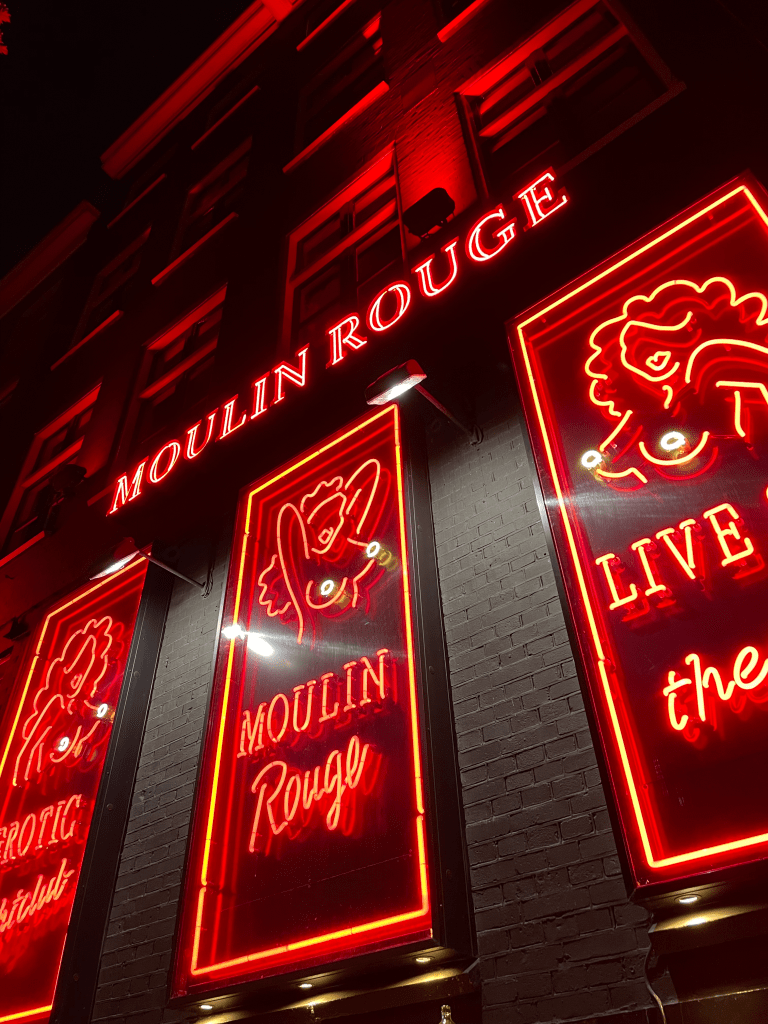
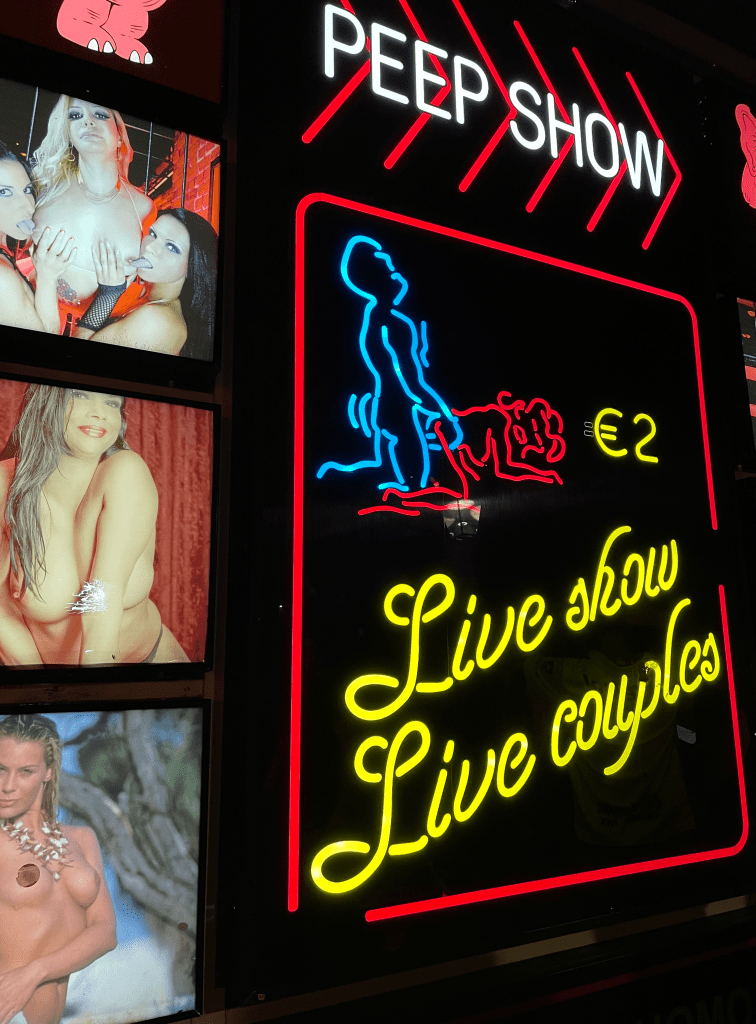
The siren-like women in the windows are dressed up for their shift ahead — bikinis, lingerie, leotards, straps or chains. Some dance, some just use their eyes to seduce you, others are multitasking on a phone call through their airpods. For those tempted, the etiquette for a private service is to walk up to your window of choice and discuss your options with the sex-worker before entering their space. For those into theatrics (not the West End kind) and have about 60 euro to spare, there are ample live sex shows at iconic venues like Moulin Rouge, Casa Rosso and Hospital Bar. Or perhaps a “2 euro for 2 minutes” peepshow is the extent your Euro summer budget allows you to indulge in. If so, wait for a booth, insert your coin into the machine, watch the glass defrost, and voila.
It’s a place where voyeurism isn’t riddled with shame, quite frankly, it’s encouraged. A place where you don’t feel eyes boring into you when you enter an adult store. A place where you can buy a (rather practical) souvenir from the Amsterdam Condomerie.



Perhaps most fascinatingly, the Red Light District feels completely foreign. In Amsterdam, the profession of sex work — which in some areas of Australia only exists underground — sits unapologetically on top of the canal water. It’s so ‘in your face’ that you start having different types of conversations with the people around you. What etiquette is assumed of customers? What type of business model is used for prostitution? How much should people be paying for that service? In Australia, these types of conversations often fall into the ‘out of sight, out of mind’ category. But, when a neon sign of tits shines proudly in your face, it’s easier to just talk about it.
In saying that, the Red Light District doesn’t go without controversy, and us tourists probably don’t understand half of it. There’s signage around the neighbourhood prohibiting littering, public drunkenness and taking photos of the sex-workers, all things that — I’m afraid to report — did occur. Due to these problems, along with mass tourism, and fears of crime in the industry, the city council recently proposed to relocate the district to a potentially tamer and safer area. I saw posters blue-tacked to the glowing red windows protesting this proposal. I don’t believe there’s any straight forward answer to dealing with such a historical institution. Livelihoods depend on it, so change isn’t going to come without tension.
My hope is that those who visit the Red Light District take these conversations home with them. I hope that sex work in Australia is talked about seriously, and not just when bucks and hens parties fill the social calendar. I hope that the Red Light District evolves as society does, whatever that looks like.
 Esperanto Magazine