Words by: Maddison Marshall
I never had the lightbulb moment where I realised I was asexual.
It was more like a slow, creeping dread that whispered “something’s not quite right with you…” It ticked away ominously in my head, as years passed and my romantic interest in boys remained alarmingly low. A gut feeling that maybe I’d never experience those “raging hormones” everyone warned me of in my teens.
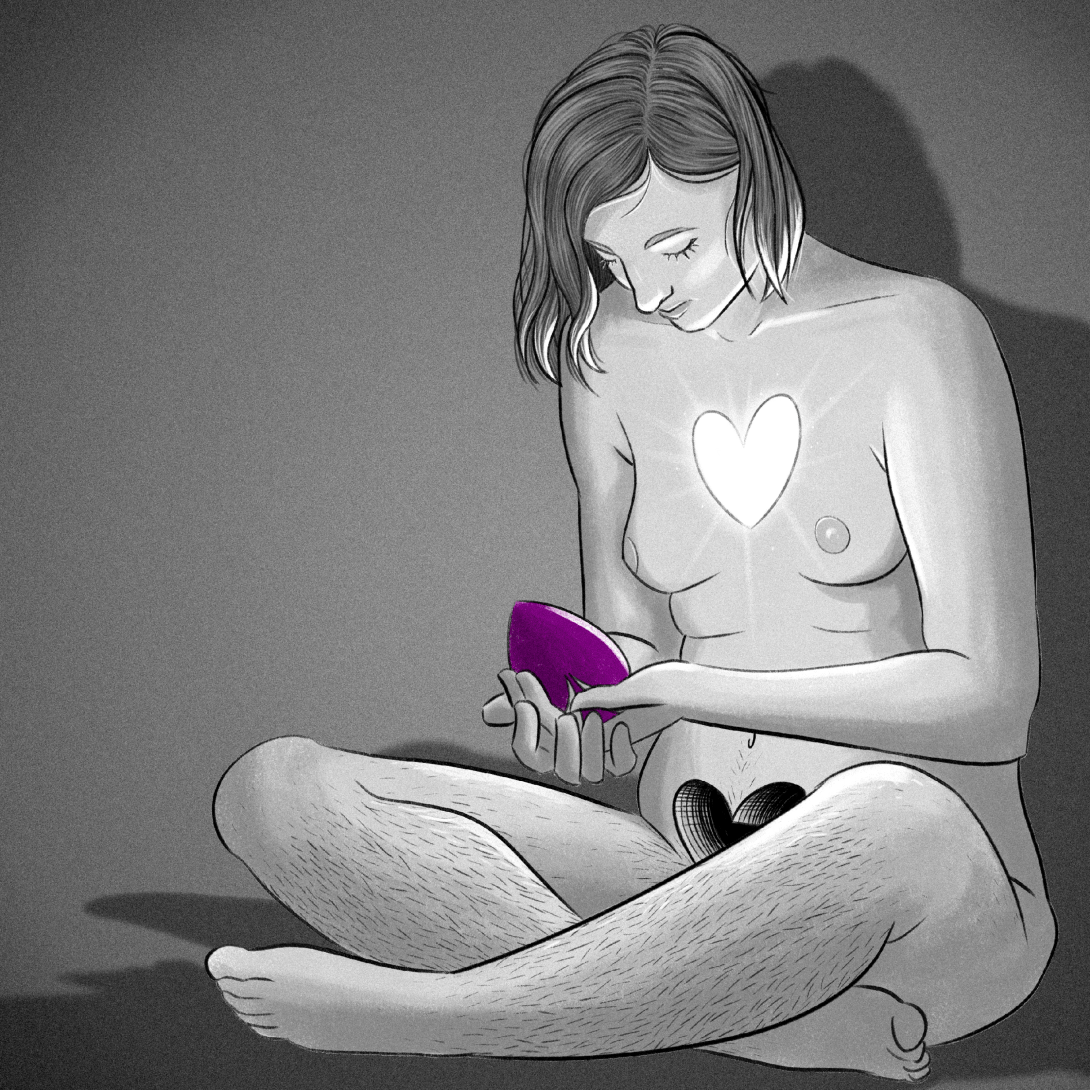
Asexuality (or ace for short) is an umbrella term for people who experience little to no sexual attraction. It can go hand in hand with being aromantic, where you feel little to no romantic attraction. But this negative language around a lack of attraction, of something being missing, can be hard to reckon with in yourself. How do you know you’re missing something when you never had it in the first place?
In my experience, I knew I had an aversion to sex because it was, quite literally, everywhere. With pop-culture, advertising, politics, language and social conditioning being saturated with sexual content, I couldn’t ignore that something in my brain didn’t click with it all. What I found more confusing was the fact that I still experienced romantic attraction. It still wasn’t as much as my peers, but it was there, and I couldn’t understand why it never escalated into sexual attraction. The infatuation I experienced with my first crush was an amazing feeling, and I was relieved that I finally felt this way about a boy. But still, there was no sexual attraction, and that was scary.
Identifying as ace isn’t just about accepting that you don’t experience sexual attraction; asexuality is a large spectrum with many grey areas. So, you are constantly dealing with a brand new can of worms just when you thought you were done with the last one. For me, the biggest question was ‘would anyone actually want to be in a relationship with me if it meant never having sex?’ And my answer to that question was always a cynical ‘no’. In a society that puts sex on a pedestal as the be-all and end-all of intimacy and love, why would anyone agree to a relationship without sex, or with someone who’ll never desire them in that way?
It doesn’t end there. Asexuality can raise all kinds of other questions, like whether you want kids if it means you need sex to get pregnant, or whether you should feel romantically attracted to all genders since genitalia isn’t technically relevant to you. It gives you social anxieties you didn’t expect, like whether people would feel pity for your partner if they knew you were ace and assumed you never have sex, or if other people in the LGBTIQA+ community will think you’re not ‘queer enough’. Coming to terms with your asexuality can be a long process, I might have to reckon with it for the rest of my life.
I don’t know if I’ll always identify as asexual, or how it will grow with me. But what I do know for sure is that you don’t need sex in order to experience intimacy; this is something everyone can have, regardless of sexuality. Sex and romance is fun and exciting, but it isn’t the ultimate almighty pinnacle of human connection, and you certainly aren’t broken if you never experience it or don’t want to. I know this because of the shared language I have with my sibling, the safety of my mum’s shoulder, the way I feel so seen by my best friend, the pure joy in the family dog’s eyes when she sees me come home, the tears of laughter I’ve shed with my uni friends, the sweet affection I’ve received in my new relationship that I never thought I’d find.
All of this has made me feel more loved and whole than sex ever could.
 Esperanto Magazine